DIDIPIO, Quirino — OceanaGold Philippines Inc. (OGP) is accelerating its transition toward advanced automated mining operations at its Didipio mine by becoming the first in the country to conduct a wireless underground blasting trial at its Didipio gold-copper mine.
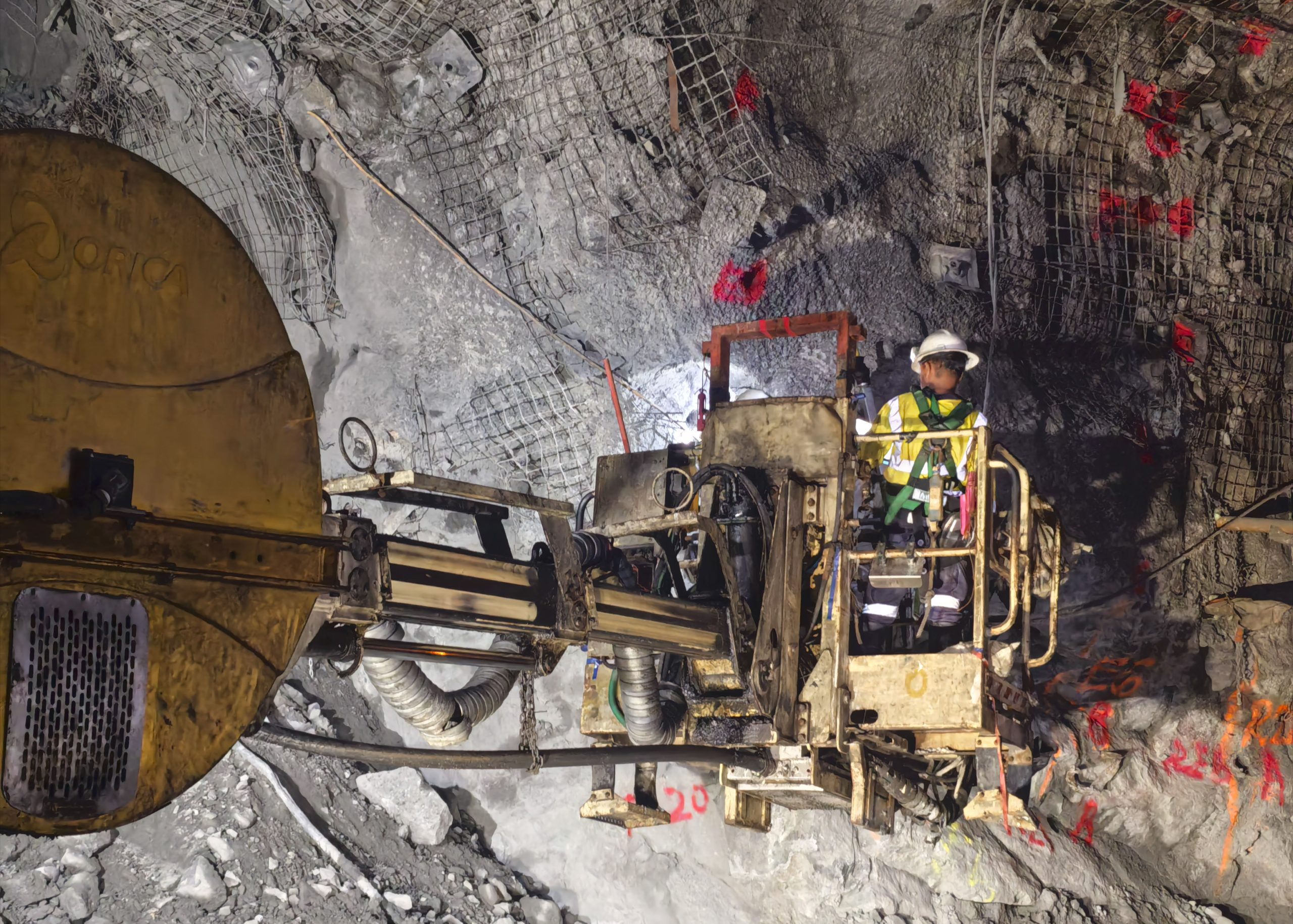
The successful August 2026 trial of Orica’s WebGen system makes Didipio the first operation within the OceanaGold Group and only the second underground mine in Asia to test the technology. The innovation enables underground blasting without traditional physical wire connections between explosives.
The milestone forms part of OGP’s broader strategy to modernize operations through automation, connected systems, and remote operations, which company executives showcased at the Mining Philippines 2026 International Conference and Exhibition.
According to James Isle, Asset President of OceanaGold Didipio Mine, the site has implemented wireless initiation systems aimed at delivering critical safety benefits reducing risks in high-hazard areas underground while optimizing production during traditional operational downtime.
“The trade-off is, it’s obviously safer,” Isle said. “The current method that we use is also safe, but there are some safety benefits from the new method, along with reduced development requirements and more efficient blasting techniques.”
The milestone forms part of OGP’s broader strategy to modernize operations through automation, connected systems, and remote operations, which company executives showcased at the Mining Philippines 2026 International Conference and Exhibition.
“As we mine deeper underground, our priority is to find better ways of keeping our people away from higher-risk areas while maintaining safe and productive operations. For us, technology has to earn its place by making the work safer, simpler, and more efficient for our people,” added Isle.
Aside from wireless blasting, OGP is also expanding automation across its mobile fleet with the upgrading of its AutoMine hardware and software, transitioning from a system where one operator controls a single loader underground to a multi-machine setup allowing one surface operator to command up to three underground loaders simultaneously.
The remote capability targets operational downtime during shift handovers and underground blasting windows, which typically stall work for up to an hour and a half.
“These machines can operate over shift change just as efficiently,” Isles noted, adding that future equipment additions include a fully automated production drill in 2027 to execute stope excavation patterns with minimal manual intervention.
Supporting these systems is Didipio’s underground fiber and Wi-Fi network, paired with the MST tracking system and Helix Dispatch to give surface teams real-time visibility over personnel, equipment, and operational delays.
The company is also slated to roll out a Ventilation on Demand (VOD) system in 2027 using smart, variable-speed fans to optimize power usage as mining operations extend deeper.
To support the technological transition, Didipio employees recently completed specialized AutoMine Load & Haul Multi-Lite training.
OGP reported that its total workforce grew from 800 employees at the end of 2024 to 960 by late 2025.
Marjorie Idio, Manager of Communications and Investor Relations, emphasized that 97% of the mine’s workforce is Filipino, with active understudy and succession programs designed to transition local staff into technical and managerial roles.
“Innovation is not just about demonstrating technology for its own sake. It has to change the way we work for the better by making the work safer and by helping our people and equipment work more effectively,” added Isles.
OceanaGold’s current mine life at Didipio extends through 2037 under its Panel 3 reserve, with additional prospective targets under exploration across its 5,000-hectare Financial or Technical Assistance Agreement (FTAA) area. Roderick Osis