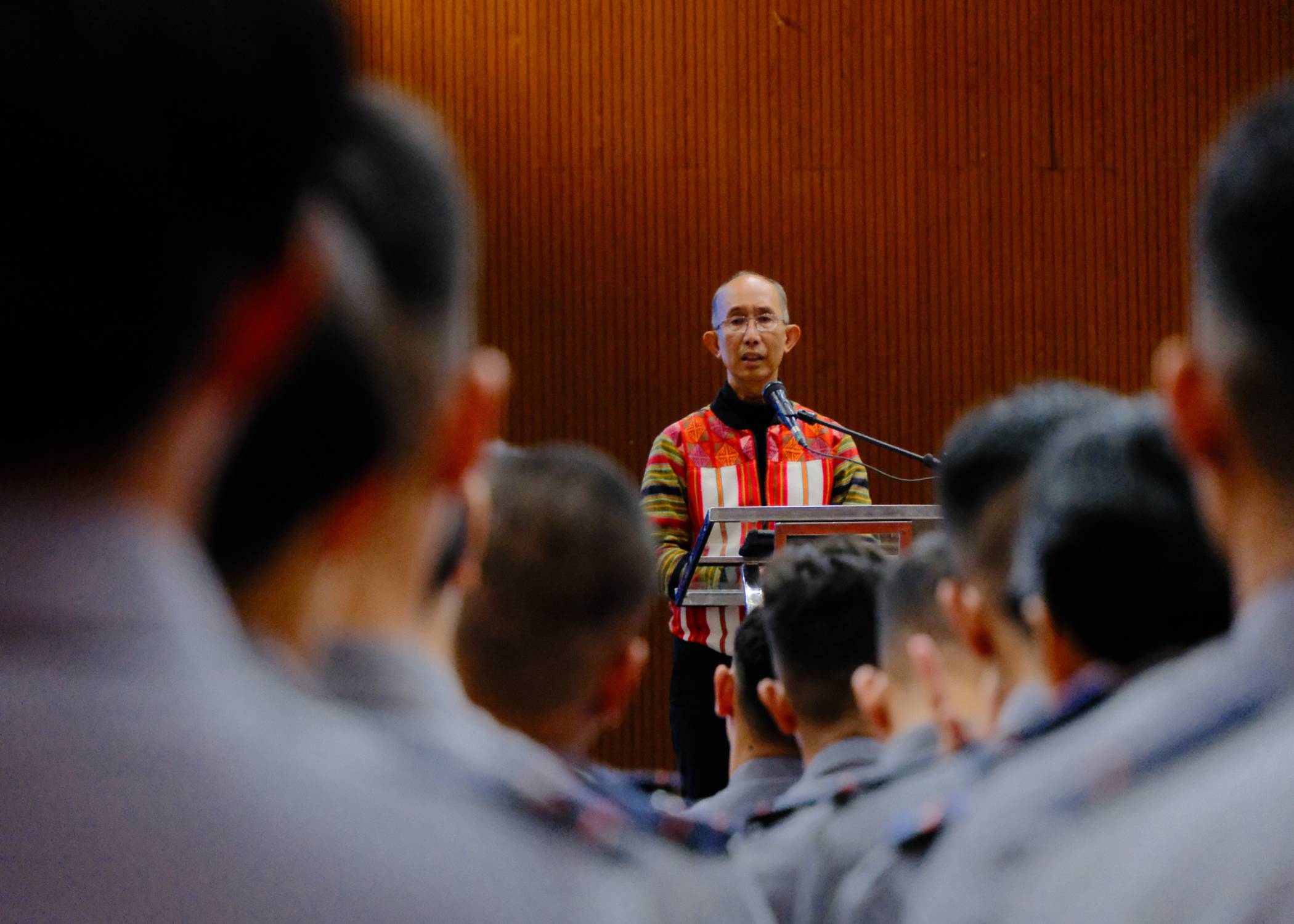
Counting down his final two years in office, Baguio City Mayor Benjamin Magalong delivered his 2026 State of the City Address (SOCA) at the Baguio Convention Center on Tuesday, prioritizing institutional sustainability over short-term political gains during the city’s 117th Charter Anniversary.
Emphasizing that his administration’s remaining focus is anchoring the long-term “Baguio 2043: A Livable, Inclusive, and Creative City” vision, Magalong declared that true reform requires making leadership temporary while making systems permanent.
“Our local economy also continues to grow. In 2024, Baguio’s economy expanded by 5.8%, from 169.02 billion pesos to 178.85 billion pesos, already 26.09 billion pesos above our pre-pandemic level. In the long run, we also have to strengthen our local revenue base,” he said.
To support waste management costs and target a 20% reduction in total waste, the city enacted Ordinance No. 69, Series of 2026, introducing garbage fees. Complementing this, Ordinance No. 15 established the Pansa-Nopen Tayo Circular Economy Framework across all 128 barangays, supported by the United Nations Development Programme and the European Union.
Magalong noted that the mindset should shift toward treating waste not as waste, but as a resource citing six barangays currently serve as pilot sites for Materials Recovery Systems alongside the ongoing construction of a modern Waste Processing Facility and the launch of a circular economy resource book for basic education.
“We are making sure the next generations are prepared. Last June, we launched the Pansa-nopen Tayo Circular Economy Resource Book for Basic Education, which provides our schools with actual lessons and activities that they will include in their curriculum. We want our children to grow up understanding that waste reduction, reuse, recycling and responsible consumption to name a few should already be part of everyday life.”
Addressing water shortages, Magalong unveiled the results of a £2-million or P145 million British Government-funded feasibility study conducted with the Baguio Water District. The study projected a water supply gap of at least 117 million liters per day by 2055, evaluating eight potential sources for future development.
The city is also partnering with the Philippine Disaster Resilience Foundation and Canada on the four-year BRIDGE Project to manage watersheds and groundwater systems.
To meet local housing needs, five new development sites were identified, including Irisan Pansa-Nopen Village, Asin Housing Village, GSIS Property near the Convention Center, PNR Property in Marcoville, and the DICT Compound in Quezon Hill, alongside the ongoing Luna Terraces project.
“We are closely coordinating with affected residents, developers, the Social Housing Finance Corporation, Pag-ibig and our other partners as we work through the requirements for each site,” Magalong shared.
Magalong highlighted the city’s designation in March 2026 by the UN Office for Disaster Risk Reduction as a Global Resilience Hub under the Making Cities Resilient 2030 initiative. He also outlined digital transparency and public service enhancements, including the MINERVA analytics platform, the Baguio In My Pocket Plus app, the PRISM infrastructure tracking portal, and an Open Data Portal aligned with Global Open Data Index standards.
To maintain direct communication with residents, the city institutionalized Kapihan sa Barangay sessions, bringing department heads directly into communities to resolve local concerns. Finally, Magalong detailed key integrity measures, such as adopting a £1-million British-funded roadmap toward ISO 37001 Anti-Bribery certification and waiving mayoral discretion in personnel selection to guarantee merit-based promotions through the Personnel Selection Board.
Magalong said “We only have 2 years left in this administration. My only hope is that when we leave, we leave a Baguio that you can be proud of. Our purpose and focus here was always about building and strengthening good governance with you. We have shown all over the world that good and strategic governance is possible. I put emphasis on you, the people of Baguio, because it would not exist without your cooperation, participation, and continuous feedback particularly on how we can further improve the way we govern the city.” By Maria Elena Catajan
Note: The ceremony opened on a solemn note as Magalong led a moment of silence for 11 residents who recently died in local tragedies, including 10 victims of a landslide in Guisad Surong and muralist, Anilito Acurin who died in a vehicular accident.