
Philippine health and finance officials are proposing a dramatic hike in excise taxes on electronic cigarettes, sugary drinks, and hard liquor under a comprehensive legislative package designed to curb a surging youth vaping epidemic and tackle rising rates of diabetes and kidney disease.
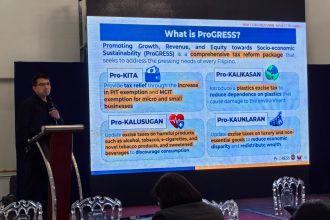
Presented during a stakeholder briefing in Baguio City, the “Pro-Kalusugan” (Pro-Health) pillar of the Promoting Growth, Revenue, and Equity towards Socio-Economic Sustainability (ProGRESS) tax reform seeks to eliminate tax disparities that have made e-cigarettes and processed sugars cheap and widely accessible.
According to National Nutrition Survey data released by the Department of Science and Technology–Food and Nutrition Research Institute (DOST-FNRI), e-cigarette use among Filipino adolescents aged 10 to 19 surged from 7.5% in 2021 to 39.9% in 2023. Adult usage over the same period rose from 1.4% to 9.9%.
Health advocates point to lower tax rates on vape products compared to traditional cigarettes as a major factor driving accessibility. Under current law, heated tobacco products (HTPs) and nicotine salts face significantly lower excise taxes than traditional cigarettes.
The Department of Finance proposal establishes full tax parity across all nicotine delivery systems. By 2027, HTPs, salt nicotine, freebase e-liquids, and novel tobacco products will be taxed at P72.93 per unit or pack—matching the rate for traditional cigarettes—followed by a 5% annual indexation. The bill also introduces a new standalone excise tax of P150 on every e-cigarette device sold.
“E-cigarettes do not emit plain water vapor, but toxic substances including cadmium, diacetyl, heavy metals, and cancer-causing chemicals,” said Department of Finance Under Secretary Karlo Fermin Adriano in his presentation, highlighting documented local cases of e-cigarette or vaping-use associated lung injury (EVALI) and acute heart conditions in young users.
Government estimates project the tax increase will reduce freebase vape consumption by 128 million milliliters and cut HTP sales by 5 million packs annually by 2030.
The legislative reform also targets the country’s growing metabolic health crisis. Department of Health data shows that nearly 40% of Filipino adults—4 in every 10—are overweight or obese, while chronic kidney disease affects 35.94% of the population, far exceeding the global average of 9.1% to 13.4%.
Despite the introduction of a sweetened beverage tax in 2018, inflation eroded its deterrent effect, pushing annual sales of sugary drinks back up to 6.26 billion liters by 2025. Department of Health surveys show preschool and school-aged children consume three to four times the World Health Organization’s recommended daily sugar limits.
To reverse the trend, ProGRESS raises the excise tax on beverages using purely caloric or non-caloric sweeteners from P6 to P20 per liter, while doubling the levy on High-Fructose Corn Syrup (HFCS) from P12 to P40 per liter. The proposal repeals exemptions for 100% natural fruit and vegetable juices without added sugar and expands coverage to include ice cream and edible ices.
The Department of Finance projects the higher sugar levy will reduce overall sweetened beverage demand by 27.2% in its first year, led by a 48.9% decline in powdered juice mix sales and a 31.8% drop in carbonated soft drink consumption.
The bill also addresses an imbalance in alcohol taxation, where fermented liquors like beer are currently taxed 3.04 to 3.78 times higher per unit of alcohol than distilled spirits such as gin and brandy. The proposal increases the specific tax on distilled spirits from P74.16 in 2026 to P157.21 per proof liter in 2027, gradually rising to P187.24 by 2030. Roderick Osis