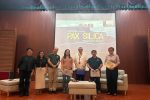

During the Manila trooping of Kanatengan Network, Cordillera Peoples Alliance (CPA), APIT TAKO, KATRIBU and other national organizations on November 10-11, the organizations have demanded the Congress and various national government agencies for demanding fair prices for their products, long-term solutions to the worsening agricultural crisis, condemning vegetable importation, and condemning development aggression projects in the Cordillera.
On the morning of the first day, a submission of a petition signed by thousands of vegetable farmers and consumers regarding the problems faced by vegetable-producing communities in the region, afterwards a mobilization was held including the symbolic action of throwing rotten vegetables at the front gate of the Department of Agriculture (DA). Various national organizations from different sectors also expressed their support in the campaigns by sharing the same demands in agriculture and concern on the lack of government support.
Marcylyn Pilala, from Kanatengan Network, stressed that the region’s food producers were still facing challenges on top of numerous agricultural crises. Pilala demands the Department to push genuine support for gardeners and vegetable farmers in the region since vegetable smuggling, importation, low budget pricing, and exploitation from middlemen intensifies.
Meanwhile, gardeners and vegetable farmers also held a dialogue with members of Congress and the Senate to raise their concerns and discuss the challenges they continue to face. The discussion highlighted the rising costs of agricultural inputs, including pesticides, fertilizers, seeds, fuel, and transportation, alongside persistently low farmgate prices that adversely affect farmers’ livelihoods. They also urged lawmakers to craft and enact policies and laws that would address these pressing concerns, particularly the regulation of agricultural imports, the prevention of agricultural smuggling, and the protection of local farmers and their livelihoods.
The second day continued with a mobilization in front of the Department of Environment and Natural Resources (DENR) highlighting the condemnation of development aggression projects inside the region which caused many displacement, disaster, and loss of livelihood of the Igorots. Rima Mangili, from Cordillera Peoples Alliance, tackled the situation of the region specifically on the numerous imperialist plunders inside the ancestral lands of the Igorots ranging on building mining, geothermal plants, and dams. Intense militarization and red-tagging were also mentioned against community organizers and peoples organizations. The campaign to defend land, life and resources were introduced as one of the main calls in the region.
Then in front of the House of Representatives, focusing on the rejection, opposing and junking of the Pax Silica, an initiative that primarily serves the interest of the imperialist agenda of US President Donald Trump. Georgea Kotyag, from the Cordillera Peoples Alliance, emphasized that the struggle of indigenous Ayta and Igorots are one for defending land, life, and resources against the self-serving interest of few powerful countries. The Cordillera region is considered as the “Watershed cradle” of Northern Luzon, hence it is no wonder that the Pax Silica project will also profiteer water from our sacred rivers.
The final rally was conducted outside the National Commission of Indigenous Peoples (NCIP) office. Sersis Dazon, convenor of Kanatengan Network, enumerated the network’s six major campaigns ranging from establishing fair floor prices for vegetables, providing sufficient agricultural subsidies for farmers, stop vegetable smuggling and importation, improve, farm-to-market roads, transportation, and market access, address usurious lending and excessive land rental costs, provide comprehensive climate adaptation and disaster assistance, and, lastly, protect agricultural and ancestral lands, watersheds, and water sources against destructive projects.
As the two-day troop concludes, the Igorot farmers and gardeners affirmed their commitment on fighting for genuine land reform and support for the local vegetable industry. As the nation’s food producers, fighting for their democratic right is a just and reasonable struggle.