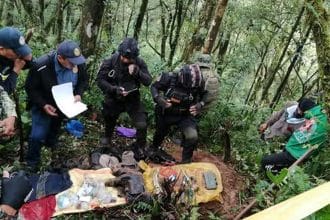

Following the deaths of seven small-scale miners in Itogon, Benguet, on Sept. 30, an industry advocate is urging the government to provide sustained support and systemic reform rather than just strict regulations for the hazardous sector.
Leoncio Na-oy, chairman of the National Coalition of Small-Scale Miners of the Philippines, said the tragedy highlights the dire realities that force locals into unsafe working conditions saying mining in mineral-rich areas like the Cordillera region is deeply tied to family survival and local economies, leaving many workers with limited livelihood options.
“The deaths of seven small-scale miners in Itogon, Benguet, on September 30, 2026, should not become another entry in the long history of mining accidents in the Philippines,” Na-oy wrote in an open letter, noting that behind every casualty are fathers, sons, and brothers who entered the mines to provide for their families but never returned home.
Na-oy added small-scale mining is fraught with daily hazards, including mine collapses, poor ventilation, gas exposure, and inadequate emergency preparedness and these dangers are exacerbated when communities operate informally, outside systems that provide technical assistance, safety programs, and appropriate technologies.
The NCSSMP chair stressed the importance of formalization, particularly through the establishment of Minahang Bayan areas, which can provide a recognized system for monitoring and guidance.
However, he warned that registration on paper alone cannot protect miners underground without meaningful, long-term government intervention.
“What matters is what happens after formalization—whether institutions provide sustained support, whether policies are implemented effectively, and whether miners are treated as partners rather than simply as subjects of regulation,” Na-oy said.
He also called for legislative reforms, specifically the revision of the People’s Small-Scale Mining Act of 1991 and the passage of the proposed Minahang Bayan Act, to create a more responsive framework for modern mining communities.
Additionally, Na-oy, who serves as a technical consultant for the environmental group BAN Toxics, emphasized the need for practical alternatives and training to help workers transition to responsible, mercury-free extraction methods.
Calling on government agencies, local government units, and civil society to invest in these communities, Na-oy said miners must be recognized as essential partners in creating safety solutions.
“Responsible mining should not be measured only by the gold produced or the minerals extracted,” he said. “It should also be measured by how we protect the people whose lives, labor, and communities make that industry possible.” NLMonitor