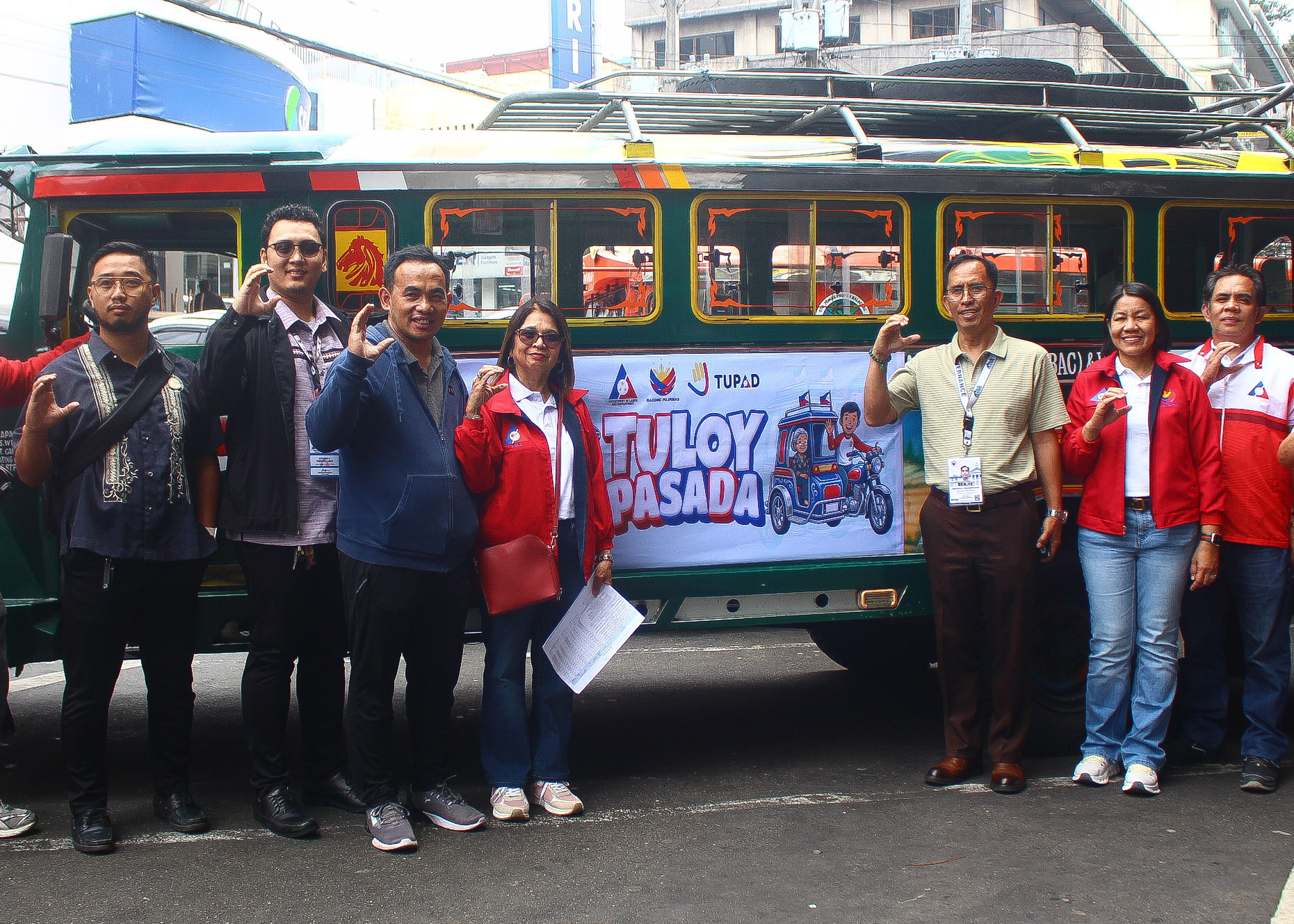
A total of 153 jeepney drivers in Baguio officially began receiving financial assistance Monday through the newly launched TUPAD Tuloy Pasada program to help ease the burden of the national energy crisis.
The government intervention provides participants with a daily wage of P505, totaling P8,072 for a 15-day work cycle, in response to Executive Order No. 110, which declared a national energy emergency, and aims to provide immediate economic relief to drivers struggling with high operational costs.
To maximize its impact on city mobility, the program initially covers 22 routes across high-density areas in Baguio.
Among the primary routes are the Trancoville (Bamapcom) line, with 50 drivers, and the Pinget line (Mountaineers Transport Service Cooperative), which includes 38 drivers.
Imelda Romanillos, officer-in-charge regional director of the Department of Labor and Employment in the Cordillera Administrative Region, (DOLE-CAR), said this is only the initial phase of the rollout.
“This is just the first batch,” Romanillos said in Tagalog. “We have 153 jeepney drivers participating. Again, for the first batch, we have 22 routes.”
Another 800 drivers are expected to benefit the program in its second phase.
To ensure fair play the wages are not paid in a single lump sum but are distributed weekly at the DOLE office to provide consistent financial support throughout the 15-day cycle.
Romanillos also urged the dirvers to prioritize road safety throughout the program.
“First and foremost, drive safely,” Romanillos said. “You hold lives in your hands. To those holding the steering wheel, I hope our passengers are safe to and from their destinations.”
The initiative is spearheaded by DOLE in partnership with the Land Transportation Franchising and Regulatory Board, the Baguio City government, and local driver associations.
To ensure that the jeepney drivers will be able to receive their aid, DOLE has allocated approximately P11 million for both the first and second batch.
Aside from the daily wages, the program provides participants with personal protective equipment, including T-shirts and masks, as well as Government Service Insurance System accident insurance to protect the livelihoods of displaced and disadvantaged workers.
Driver participation is verified through monitoring forms, the display of official program tarpaulins on their vehicles, and designated shifts running from 6 a.m. to 12 noon. Sean Kimrhed Lardizabal | UC Intern