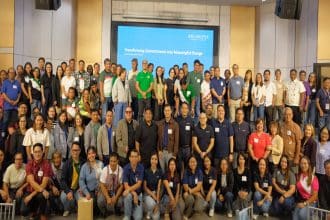
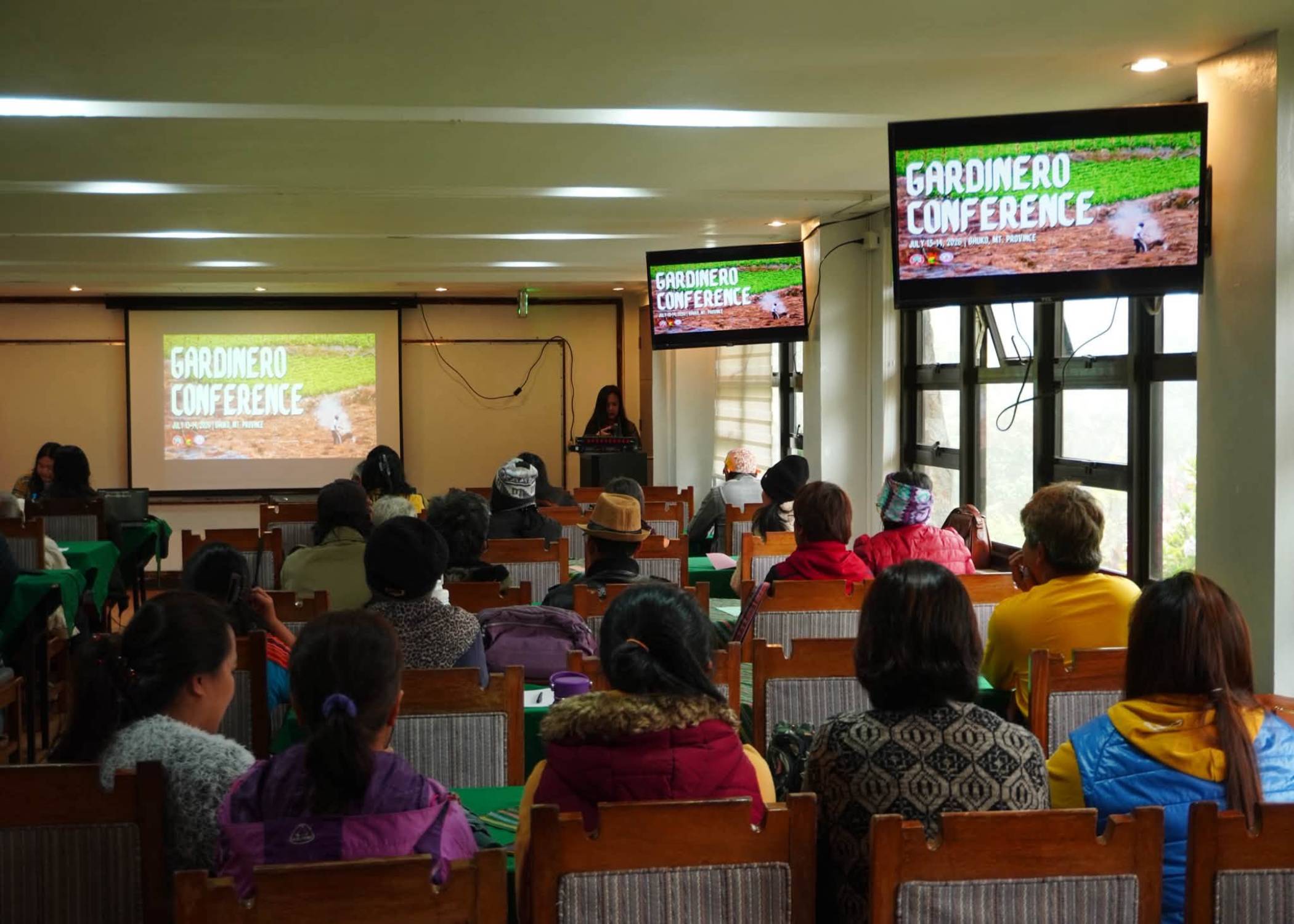
In a two-day Gardinero Workshop held on July 13–14 at the Mount Data Hotel in Bauko, Mountain Province, nearly one hundred participants representing vegetable farmer organizations and farming communities from Benguet, Ifugao, and Mountain Province came together to formally establish a new campaign network aimed at addressing the persistent and worsening issues of the vegetable industry. The new formation has been named the Kanatengan Network, a term chosen to highlight the Cordillera’s renowned cluster of municipalities across the three provinces that produce the bulk of the country’s highland vegetable supply, also called the vegetable belt. Aliansa dagiti Pesante iti Montanyosa (APIT Mon) is the lead convenor of the network.
The Gardinero Workshop was jointly organized by the Cordillera Peoples Alliance (CPA) and its peasant affiliate Aliansa dagiti Pesante iti Kordiliera (APIT TAKO). The activity built upon grassroots data-gathering efforts on vegetable production, with farmers presenting detailed accounts of the costs of cultivating temperate-clime crops such as cabbage, beans, sweet peas, potatoes, and sayote. These inputs provided a clear picture of the economic pressures faced by farmers and became the basis for the creation of the Kanatengan Network.
During the workshop, participants underscored the main factors driving many farmers into bankruptcy. Among these were the high costs of production, ranging from farm inputs to transportation, coupled with extremely volatile market prices. Farmers also raised alarm over the smuggling of imported vegetables and other consequences of a liberalized vegetable industry, which they said undermines local production and worsens their already precarious situation.
From these discussions, the participating organizations consolidated their demands into six urgent calls:
- Implement a just and fair floor price for vegetables.
- Provide sufficient agricultural subsidies to farmers.
- Build the long-promised farm-to-market roads and improve existing ones.
- Stop the importation of vegetables that compete with local produce.
- Reduce usury and land rent.
- Lower the price of farm inputs.
The Kanatengan Network is envisioned as a campaign platform that will unify vegetable farmers across the Cordillera in asserting their rights and pushing for concrete policy changes. In the coming months, the network will roll out mobilizations and activities to amplify these demands. The earliest of these will be another gathering this August, coinciding with the International Day of the World’s Indigenous Peoples.
The Gardinero Workshop and the launch of the Kanatengan Network were also supported by the Cordillera Women’s Education Action Research Center (CWEARC) and KATRIBU – Kalipunan ng Katutubong Mamamayan ng Pilipinas.