
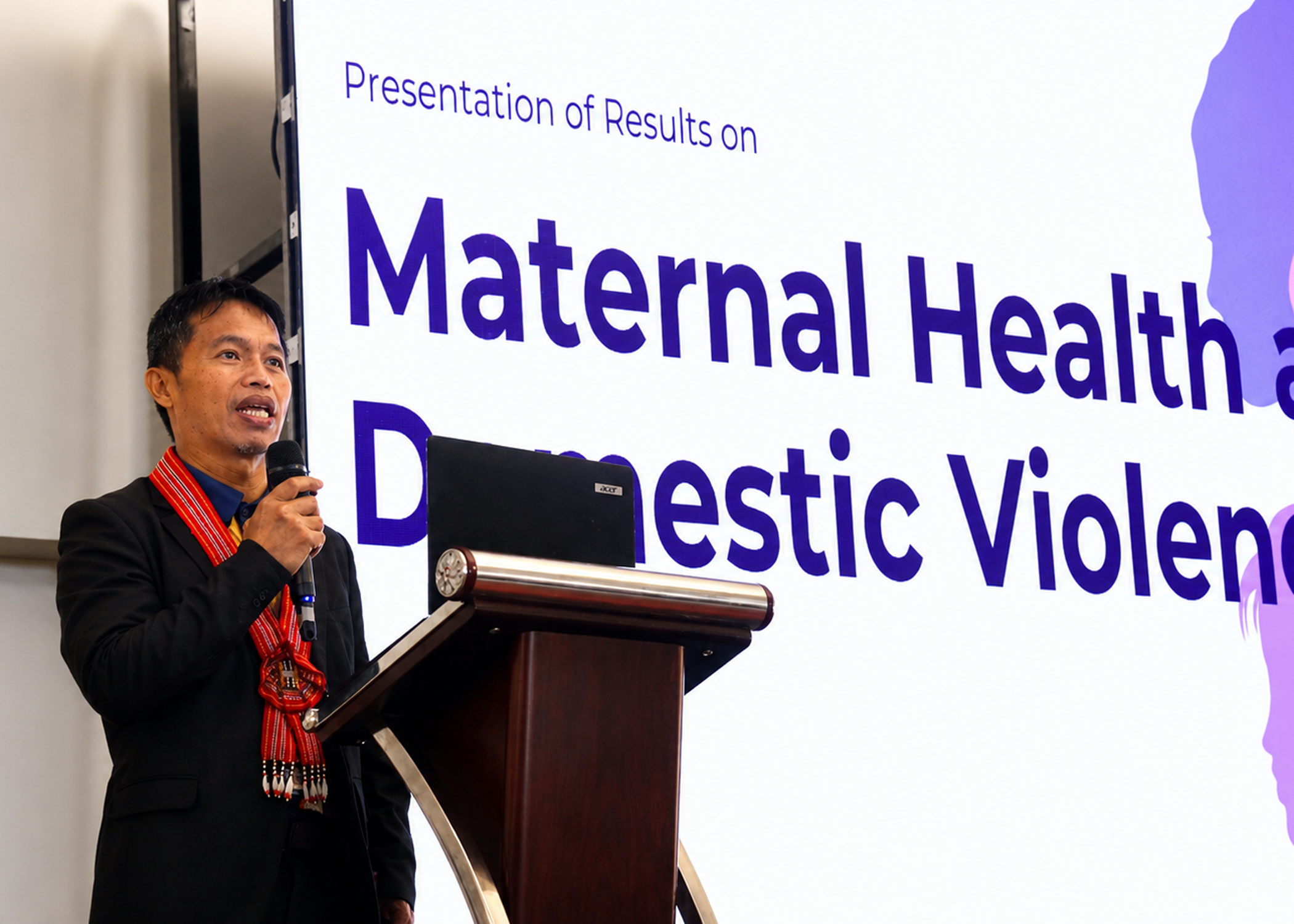
Maternal health in the Cordillera Administrative Region has seen significant improvements, but a disturbing increase in physical domestic abuse mars the region’s latest safety indicators, according to data released by the Philippine Statistics Authority in the region.
Jerry Santos, chief statistical specialist of the Provincial Statistical Office in Mountain Province, highlighted that while more local mothers are giving birth safely in medical facilities, physical violence against women is rising despite an overall drop in general intimate partner abuse.
Statistics regarding domestic abuse painted a far more dangerous reality for women protected under the country’s Anti-Violence Against Women and Their Children Act of 2004.
On paper, the overall prevalence of intimate partner violence in the region dropped from 19.8% in 2022 down to 14.5% in 2025.
Santos detailed that emotional abuse, such as an intimate partner “saying or doing something to humiliate you in front of others,” remains the most widespread issue, affecting 12.3% of local women surveyed.
Alarmingly, physical violence completely bucked the downward trend, jumping from 5.1% in 2022 to 6.8% in 2025.
Santos warned that this metric includes severe, volatile encounters where an aggressive partner will deliberately “punch with fists or with something that could hurt,” highlighting an urgent need for stronger local enforcement and protective community intervention.
Meanwhile, PSA reported that health facility-based deliveries across the Philippines surged to 98.7% in 2025, up from 92.9% in 2022, while an impressive 99.3% of live births nationwide were attended by skilled health personnel.
Local trends in the Cordillera region mirrored these improvements, with 56.6% of pregnant women successfully achieving the globally recommended eight or more antenatal care visits, far outperforming the Bangsamoro Autonomous Region in Muslim Mindanao, which recorded a country-low 14.0%.
However, post-delivery medical interventions remain a critical weak point for health officials. National postnatal checks within the first two days after birth plummeted from a peak of 95.2% in 2017 down to 78.4% in 2025, while exactly eight out of 10 mothers in the Cordillera region received this critical early examination. John Larry ‘Lala Dy’ Agtarap/ UC Intern