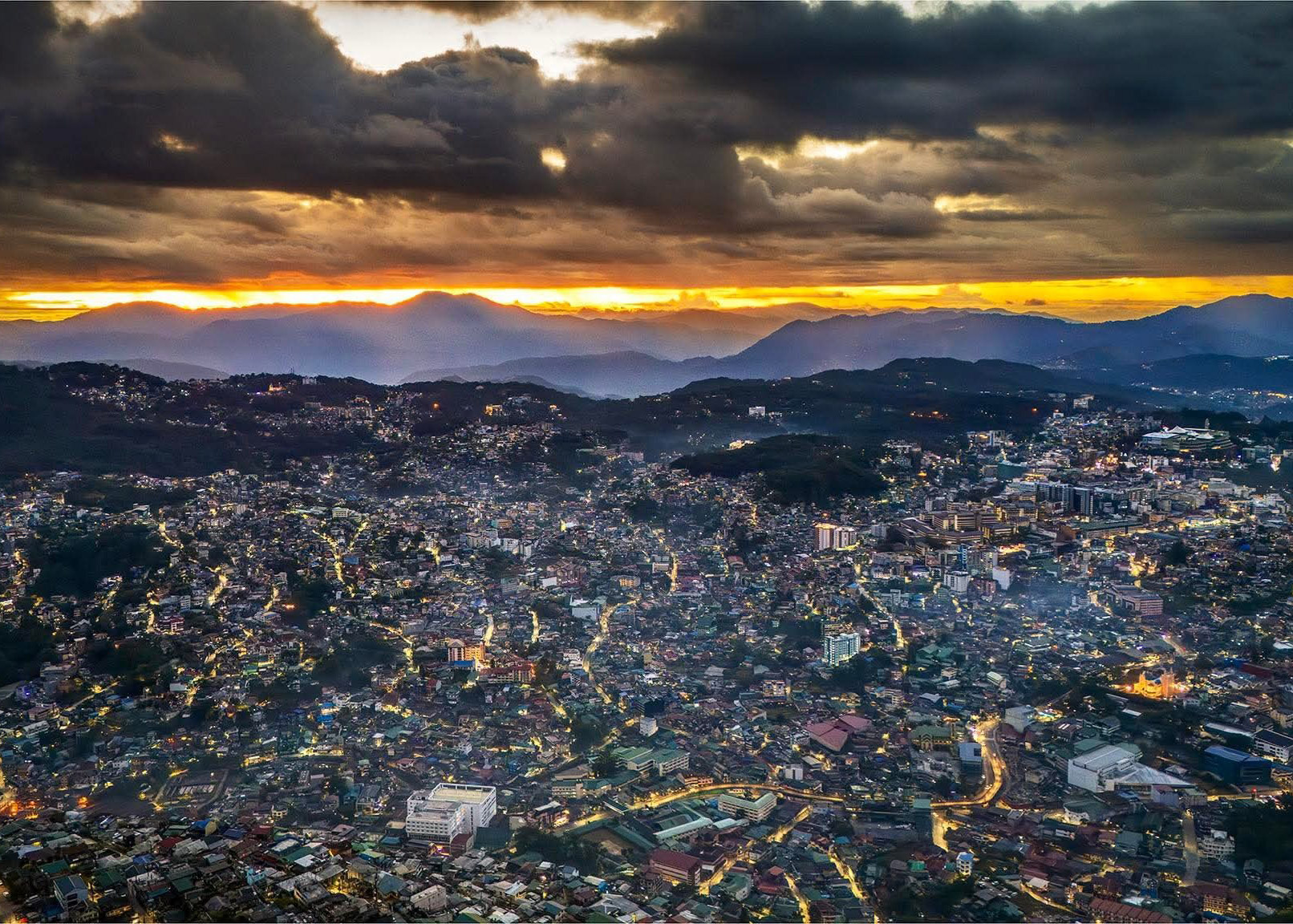
From 129, Baguio City is pushing for the merging of barangays to at least 40, in an effort to slash administrative costs and optimize public funds.
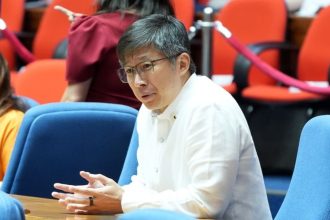
Benjamin Macadangdang, head of the Special Services Division, during a recent press conference said the primary driver behind the merging is population, rather than land area or the total number of registered voters.
Under Republic Act 7160, also known as the Local Government Code, highly urbanized cities like Baguio are mandated to maintain a minimum population of 5,000 residents per barangay but majority fail to meet this demographic quota.
Under the proposed consolidation, the city will merge geographically interconnected barangays and fuse zones that share repetitive names.
For instance, the Central Business District, which is currently fragmented into 14 separate barangays, will be compressed into one.
Macadangdang added based on the city’s study, the Central Business District can function as just one barangay, effectively eliminating 13.
“Imagine-in mo, ang central business district, 14 barangays ‘yan. Sa aming study, isang barangay na lang ‘yan. So, imagine yung naalis na 13 barangays. Tapos, ire-merge sa amin yung mga magkakapangalan, for example, Quirino Hill, yung Middle, East, West, Quirino Hill na lang ‘yan. Quezon Hill, isang Quezon Hill na lang ‘yan,” explained Macadangdang
To manage the transition, the city has drafted a proposed ordinance and launched grassroots consultations to gather direct feedback from affected residents.
While the city council is leading localized efforts, Macadangdang clarified that a formal legislative act will ultimately be required and noted that while the city can initiate the process through a local ordinance, a policy or law from Congress is necessary to formalize the transition.
Macadangdang added a technical working group together with the Department of the Interior and Local Government are continuously evaluating the final number for the merging which is set from 40 to 45.
The city official said the final merging depends heavily on the outcome of the technical working group’s assessments, as consultations are still ongoing to ensure the community is fully prepared for the amalgamation.
As part of the proposed merging, the city will also resolved administrative confusion regarding Barangay Bagong Lipunan, the city’s 129th barangay located inside the Baguio City Market.
A court ruling determined that a residential area cannot legally exist inside a commercial marketplace, prompting an executive order that froze its status, leaving the city with only 128 active barangays.
To ensure the process aligns with proven strategies, city officials are modeling their plan after Ormoc City in Leyte, which successfully compressed its small villages into just four large super-barangays under former Rep. Richard Gomez.
Baguio representatives are scheduled to conduct official study visits to Ormoc to benchmark their practices and analyze how territorial transitions and localized public service delivery are handled. John Larry “Lala Dy” Agtarap/ UC Intern