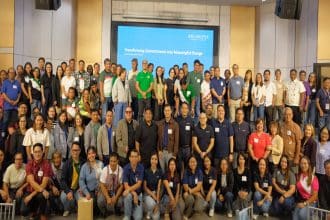
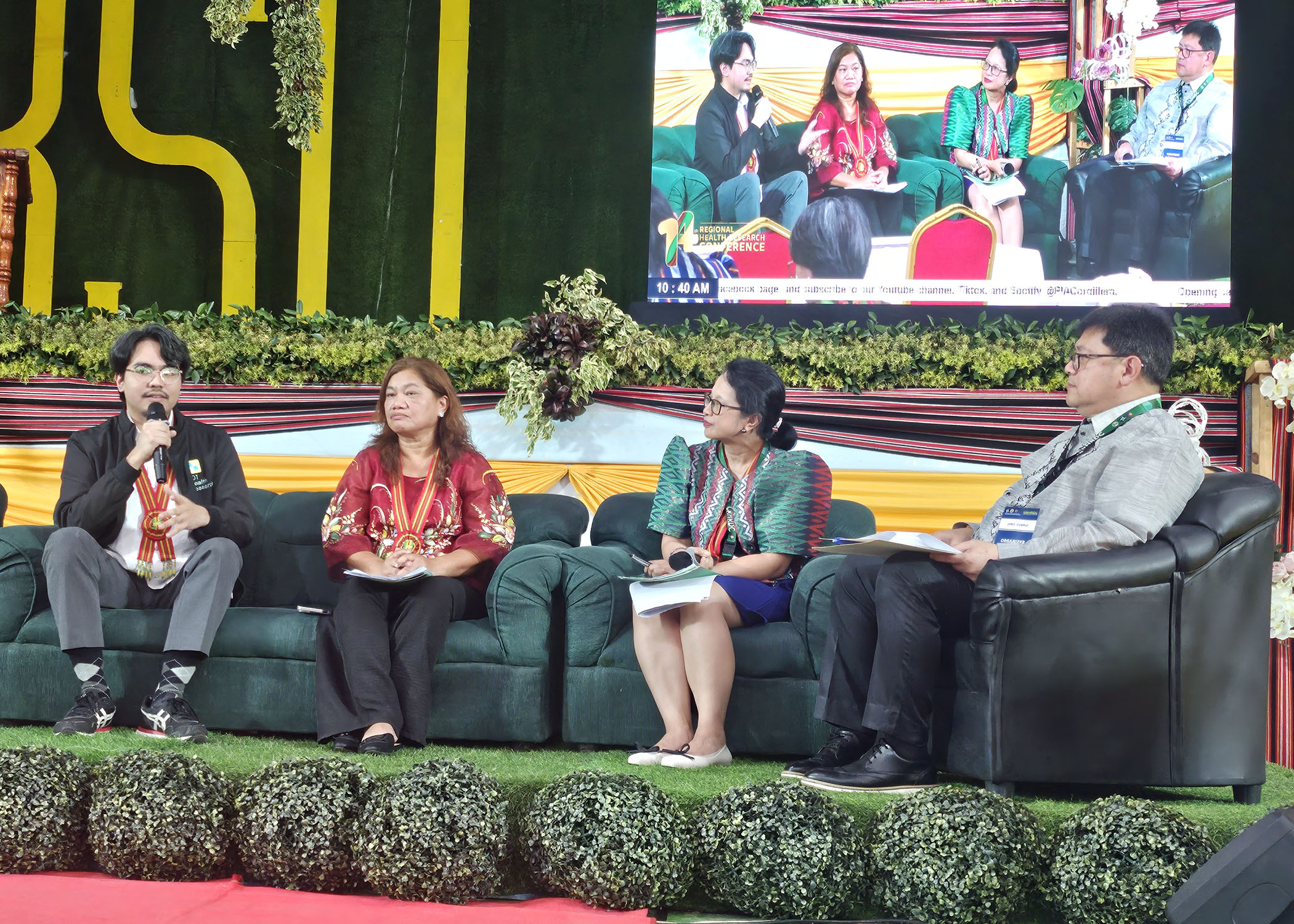
Health professionals and technology experts came together to discuss how to use artificial intelligence (AI), or smart computer programs, safely in healthcare during the 14th Regional Health Research Conference at the Benguet State University (BSU) Gymnasium on June 18.
This year’s conference focused on the theme “Binnadang for Health: Bridging Communities through Research, Collaboration, Innovation, and Care,” drawing on a local term that signifies community cooperation.
Dr. Jose Maria Lorenzo de Vera, a data expert from 101 Health Research, noted that AI serves two primary functions in the medical field but stressed that technology should never entirely replace human clinicians and researchers.
“Yung una is generative AI, you give a prompt and it gives you something back, and the main use I see of researchers is in scientific writing and analysis. When it comes to opportunities and paths forward, I’m more leaning towards the second, which is predictive AI. This is not as an assistant for scientific writing, but more as a methodology on its own, you can train them to monitor your patients’ recovery over time in their ER or at home,” Dr. de Vera added.
However, Pediatrician and Research Ethics Committee member from Baguio General Hospital and Medical Center (BGHMC) Dr. Eleanor Cuarte warned about major challenges with using AI in the healthcare system.
One problem she highlighted is “AI hallucination,” noting that her readings show it can confidently give a clinician the wrong information.
“We should guide our younger colleagues because our younger colleagues are now into AI. They’re using this information more than the input of their consultants,” Dr. Cuarte added.
Experts agreed that schools and hospitals must create clear rules to protect patient secrets and ensure students do not copy from AI. They also reminded everyone that while technology is a great helper, humans must always make the final, safe choices for patients.
“AI works best if it’s with humans. We should remember that. Let’s use AI as a tool. We should remember we are the one using it, the human,” Dr. Cuarte said.
“The value of AI, does not lie on how sophisticated ‘yung AI is, but how we responsibly use AI,” Dr. Cecilia Mercado from Saint Louis University added.
“As I always say, AI is a tool, and you as a human are the gold standard,” Dr. de Vera reminded the crowd in his closing statement. Clariz Hidalgo | UC Intern