
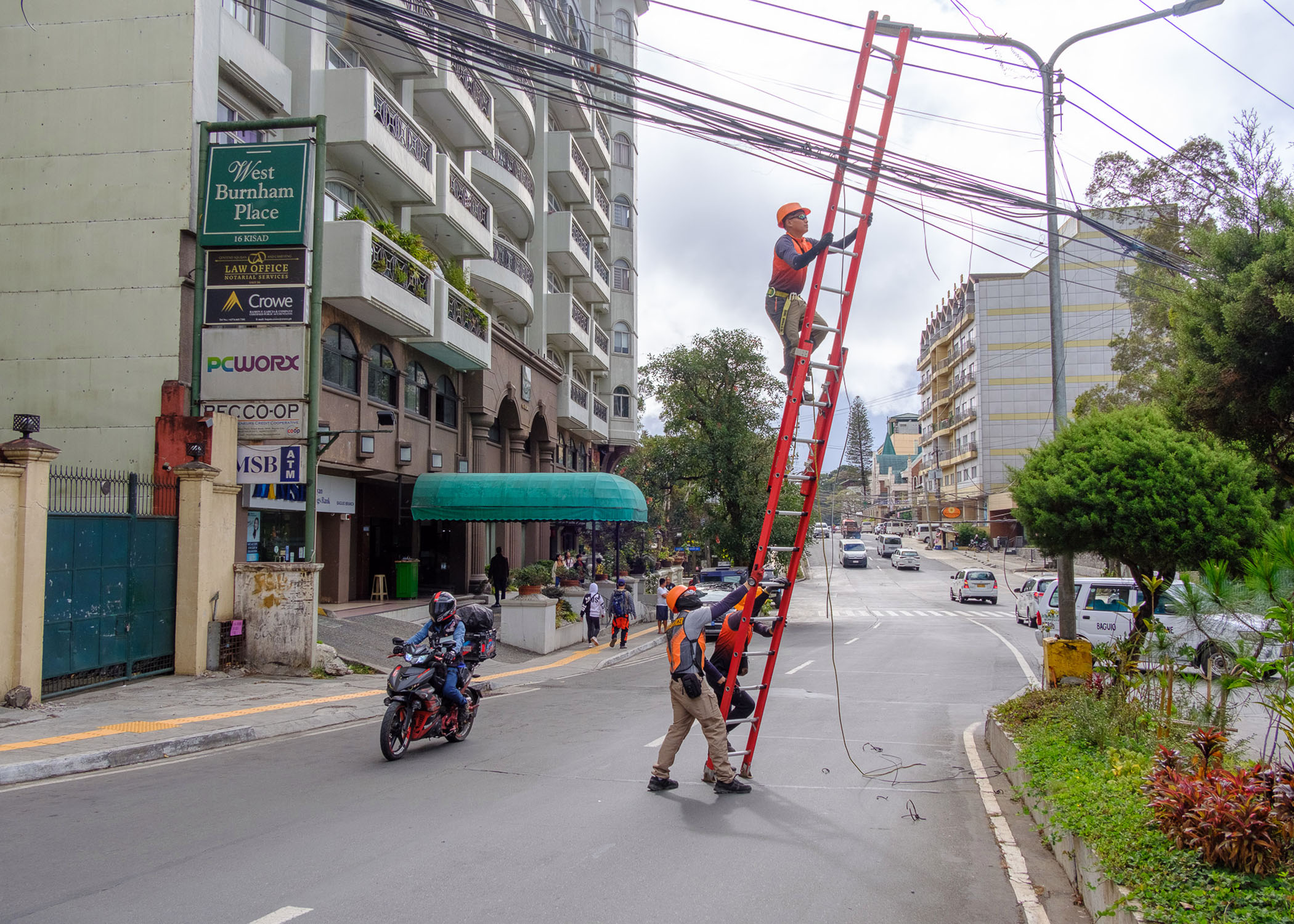
A proposed ordinance aiming to clean up hazardous, low-hanging dangling wires faces strict opposition from a city official who claim critical legal loopholes leave the measure flawed.
The draft measure, introduced by Councilor Vladimir Cayabas, seeks to penalize utility companies for abandoning messy cables, but the City Legal Office revealed two major legal gaps that include Section 12 which mandates fines “per violation area” without specifying whether the term applies to a single pole, a city block, or an entire neighborhood.
“Violation per area is not precisely defined, so it may be attacked as vague or it may be open for allowing arbitrary enforcement,” City Legal Officer Althea Alberto warned.
The second loophole targets corporations as whole entities rather than naming individual executives, noting this flaw routinely forces prosecutors to dismiss charges under Philippine criminal law, which requires individual criminal liability.
The council also examined operational gaps between local utility providers.
Engr. Fraiser Angayen, from the Benguet Electric Cooperative, explained that under a Joint Pole Agreement, major telecommunications providers pay fees based on the number of poles they actively occupy.
However, the cooperative admitted its current contract lacks mechanisms to punish internet companies that leave broken or hanging wires behind.
Vice Mayor Faustino Olowan however said these mechanisms should have been included in their contract.
“Parte koma ti kontrata yo ah nga kitanda tapno awan ti dangling tapno awan problema yo ti siyudad (It should have been part of your contract to ensure there are no dangling wires so you won’t have problems with the city),” Olowan stressed
Daryll Longid of the Public Order and Safety Division noted that clearing the streets remains difficult because the owners of older wires cannot be identified and these lines are considered dangerous.
“I would say 95% are properly identified, there are lines that are very very old, those are the usually black ones without color coding. We continue to clean them daily, may mga 15 years old pa dyan,” Longid explained.
City safety workers currently cut down dead wires daily to prevent heavy utility poles from collapsing.
Out of 128 barangays in Baguio, crews have completed cleanup operations in only 28 neighborhoods. To accelerate the process, the City Council is considering a strict six-month deadline to force compliance.
“With this ordinance, it would compel all the telcos to field more teams, sila po ang kailangang gumastos dito so not only one team, maybe 5, 10 teams even, they have to pay for this because it’s their facilities,” Longid added. Clariz Hidalgo | UC Intern