
A UNESCO Creative City is facing a creative crisis.
In the midst of the 2025 Ibagiw Creative Festival, an event aimed to uplift the creative industry, the voice of artists rises in discontent over management and ethics.
In a statement, the group Sulong Likha said: “We condemn the corporate-driven, tokenistic, and extractive direction that cultural gatekeepers have chosen to take. The city’s institutions have leaned far too heavily on the language of creativity while hollowing out its meaning. Indigenous cultures, whose practices carry historical, political, and communal weight, are too often presented as consumable ‘experiences’—stripped of context, sanitized for visitors, and detached from the communities who keep these traditions alive. This is nothing short of misrepresentation and commodification masquerading as support.”
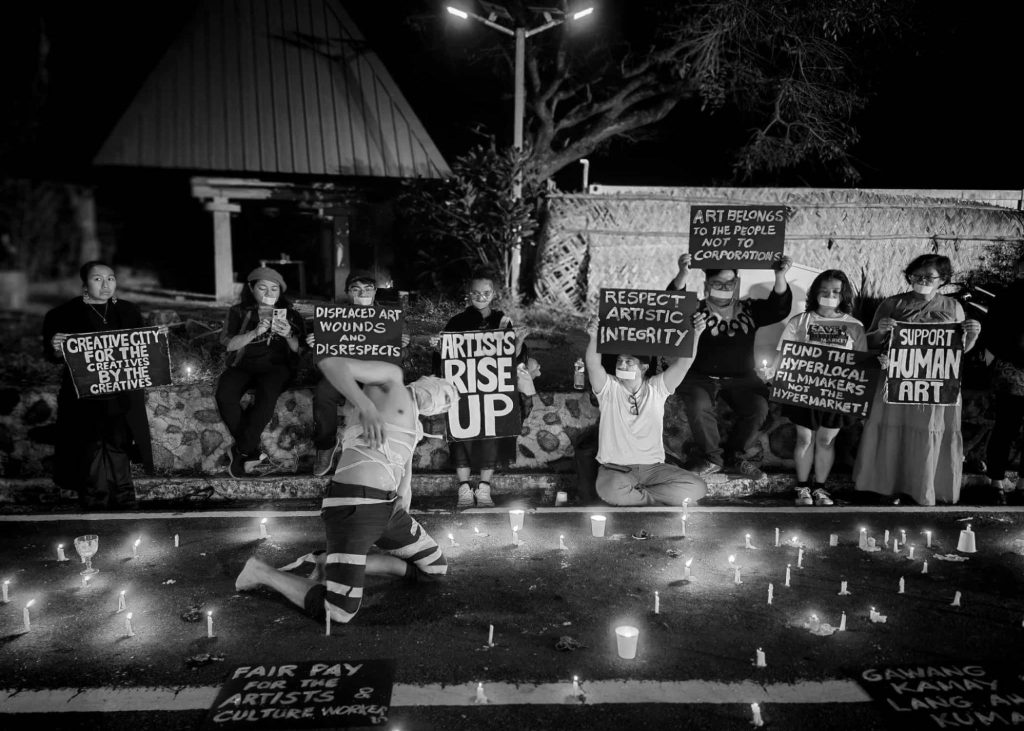
On Sunday evening, November 23, a candle lighting was offered outside the Baguio Convention Center during the closing ceremonies of the 2025 edition of the Ibagiw Festival. This served as a silent protest against the issues the artist community faces.
A performance by Angelo Aurelio dedicated to creatives, ethics, rights, and protocol highlighted these as the top concerns of the industry—the very industry that catapulted Baguio to its status as a UNESCO Creative City for Crafts and Folk Art.
Creatives converged outside the BCC while the closing ceremonies were ongoing, with sentiments stemming from an abuse of power in the handling of this year’s events, to a lack of compensation for artists and performers, ethical practices in work, and a general discontent with the protocol in dealing with the sector.
Sulong Likha added that Baguio’s recognition as a UNESCO Creative City should have strengthened support systems for artists. Instead, many have found their access to resources shrinking, their concerns ignored, and their contributions taken for granted. For years, the city’s creative sector has been held up as a pillar of development, yet the artists who built that pillar are increasingly pushed to its margins.
“In a city whose identity and economy lean heavily on creative labor, it is unacceptable that the very people who sustain that identity are left fighting for dignity, fair treatment, and basic respect,” the statement read.
Baguio City was designated a UNESCO Creative City in 2017 for Crafts and Folk Art, becoming the first Philippine city to join the Creative Cities Network.
Despite the UNESCO recognition, Sulong Likha pointed out a commodification of indigenous cultures: “Indigenous cultures, whose practices carry historical, political, and communal weight, are too often presented as consumable ‘experiences’—stripped of context, sanitized for visitors, and detached from the communities who keep these traditions alive. This is nothing short of misrepresentation and commodification masquerading as support.”
Sulong Likha, in closing, said Baguio deserves cultural leadership that respects the histories it draws from and the people who give the city its pulse. The work ahead is clear: restore trust, uphold rights, and cultivate a creative environment that lifts up everyone who contributes to it. The city’s future depends on whether it chooses to honor the creators who shaped its past and sustain its present. Maria Elena Catajan