The Baguio City Council recently urged national line agencies and local utility providers to map out the implementation of Republic Act No. 11697, also known as the Electric Vehicle Industry Development Act.
The move comes as recent data highlights a significant gap in electric vehicle adoption in the Cordillera Administrative Region alongside hurdles in establishing critical infrastructure.
Patrick Aquino, director of the energy department’s Energy Utilization Management Bureau, revealed during a virtual presentation that there are only 182 registered electric vehicles in the region out of 60,906 total registered vehicles, representing a 0.30% adoption rate.
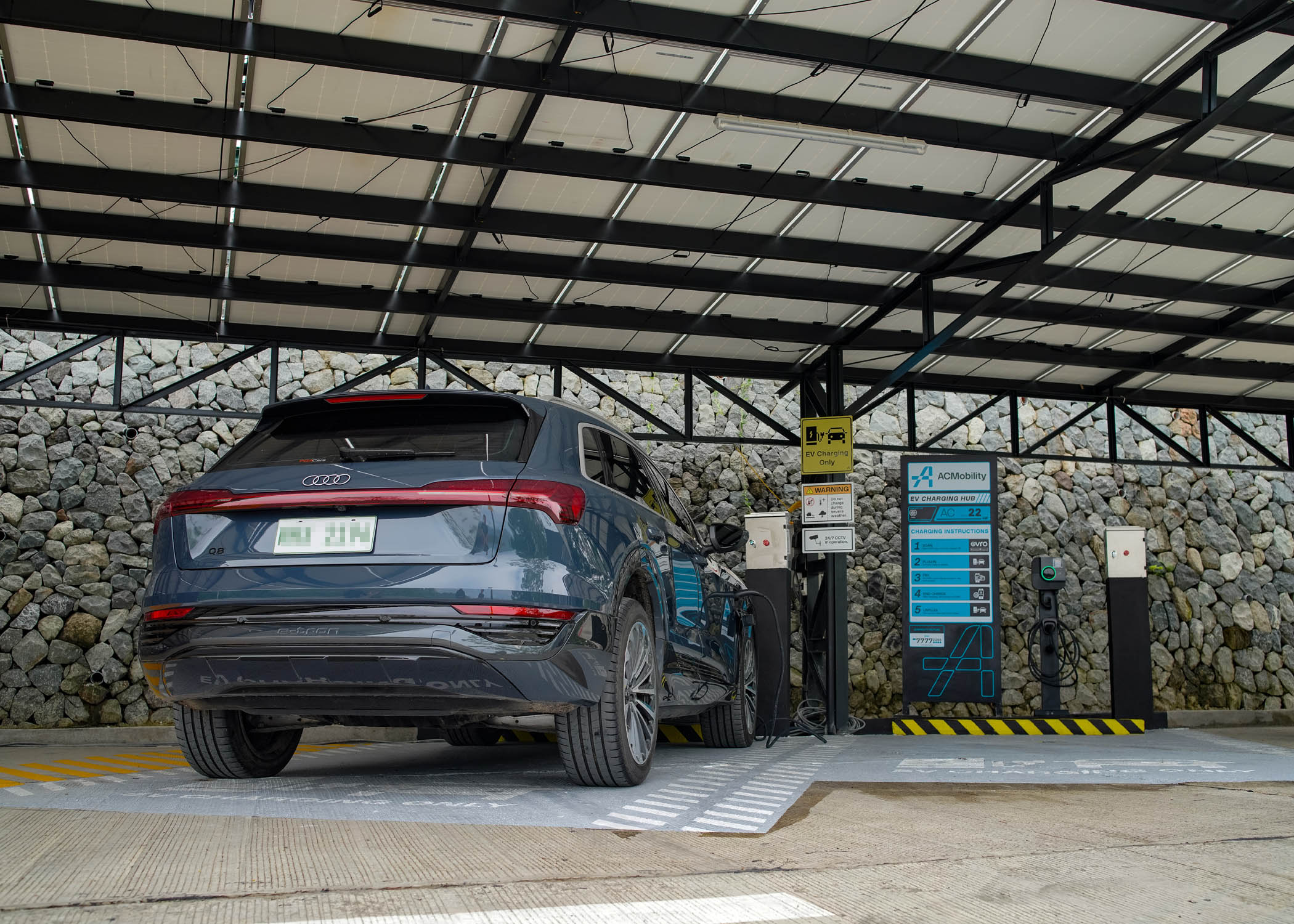
Furthermore, there are only 22 available charging points across the entire region, consisting of 18 AC slow-charging points and four DC fast-charging points.
Nationally, the energy department has accredited 95 electric vehicle charging station operators, 72 suppliers, and 113 service providers. Locally, infrastructure remains concentrated, with existing operational charging stations in the city located only within Camp John Hay facilities and at SM City Baguio.
Jeremias Agpes of the trade and industry department’s regional office noted the regulatory challenges of monitoring these setups, stating the office has no record for manufacturers in Baguio, though it continues to monitor regional charging stations and has received national guidelines outlining technical regulations for manufacturers and importers.
The national law promotes the gradual adoption of electric vehicles through incentives, infrastructure development, and fleet transition requirements, requiring public transport operators, government agencies, and commercial companies to ensure that at least 5% of their fleets are electric.
Aquino said Baguio is being considered as a pilot site for the implementation of the law due to its status as one of the country’s most visited destinations and appealed for local implementation by noting that battery electric vehicles are more efficient than traditional internal combustion engine vehicles, costing approximately P1.71 per kilometer to operate compared to P3.50 for hybrids and P5 for traditional vehicles.
Addressing doubts about whether electric vehicles can navigate Baguio’s steep terrain, Aquino said the city has served as a testing ground and confirmed that the units are capable of handling the roads.
He also dismissed concerns regarding the risk of overloading the power grid, explaining that standard chargers have a relatively low power draw comparable to common household appliances adding that the national roadmap envisions a gradual transition toward renewable energy-powered transportation, targeting that at least 25% of electricity used for electric vehicle charging come from renewable sources by 2030, increasing to 100% by 2040.
The briefing also shed light on a strict timeline for the transport modernization shift, which expects a comprehensive conversion of vehicles to electric models by 2030, including an initial target of 180 taxi units.
However, Marianne Dumpayan of the Land Transportation Franchising and Regulatory Board’s regional office said information regarding the operation of more than 100 electric taxi units in Baguio had not yet been formally cascaded to their office, noting their current records only confirm electric vehicle operations in La Trinidad, Benguet.
To accelerate the transition, Aquino addressed long-standing complaints regarding the tedious three-to-six-month processing timeline for commercial charging hubs, urging the local government to help bridge permitting requirements.
Aquino clarified that charging infrastructure guidelines released last September cap the maximum processing time for interconnection at 40 working days.
Olive Bete of the Benguet Electric Cooperative mentioned that their office has received plans to install around 11 additional charging stations in the city, including sites at the Baguio Convention and Cultural Center and the Athletic Bowl, while emphasizing that home charging systems must be coordinated with the utility provider for safety.
Aquino also resolved concerns raised by local transport operators regarding the compatibility of multiple charging port designs, asserting that a unified standard has been enforced since 2024.
The default configuration for public charging stations is the CCS2 protocol, which covers 90% of commercial use, though the use of adapters for other systems is not prohibited.
Following the discussion, the Baguio City Council referred the matter to the Committee on Public Utilities, Transportation, and Traffic Legislation for further study and to coordinate with local transport cooperatives. Clariz Hidalgo/UC Intern with a report from Baguio City Council PIO