
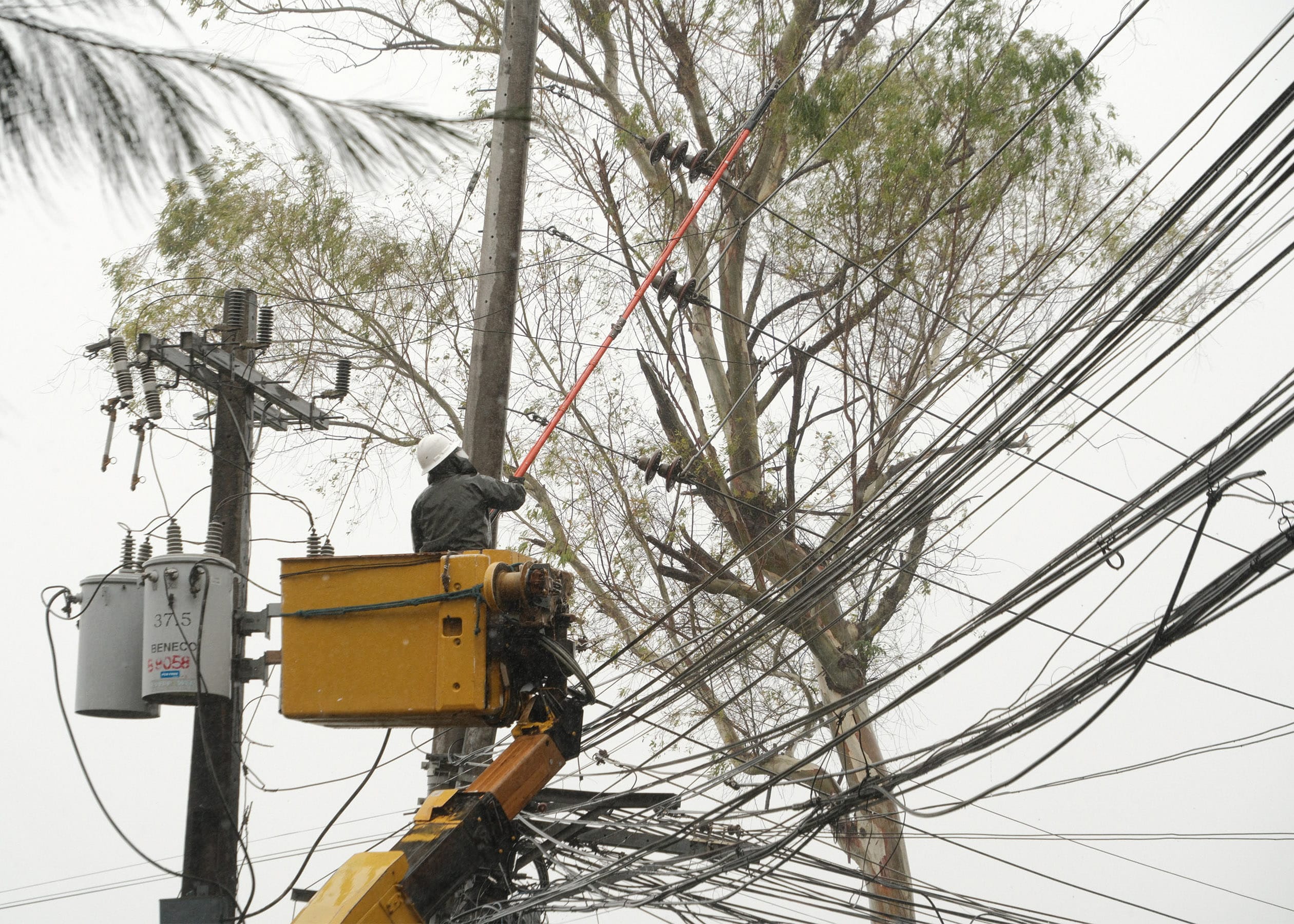
The Benguet Electric Cooperative (Beneco) warned Tuesday of potential electricity rate increases for consumers in Baguio and Benguet as worsening Middle East crisis drives global crude oil prices to volatile highs.
During a media briefing on its Business Continuity Plan, the utility revealed that the Philippines’ reliance on the Gulf region for 90% of its crude oil imports has created a “global energy shock” that is now threatening local power costs.
While BENECO serves as a distribution utility, it remains highly exposed to market fluctuations through the Wholesale Electricity Spot Market (WESM).
According to Engr. Olive Bete, manager for Corporate Planning and Development, Beneco is looking at several scenarios detailing how surging oil prices could translate to higher monthly bills for member-consumer-owners (MCOs).
If global oil reaches $100 per barrel, residential rates could jump from the February baseline of ₱8.17/kWh to ₱10.29/kWh. Under a more severe scenario of $140 per barrel, residential rates are projected to hit ₱11.63/kWh—a nearly 42% increase from baseline levels.
“Our objective is to protect MCOs from tariff shocks while ensuring service continuity,” Bete stated in its briefing.
The Energy Regulatory Commission (ERC) has already taken the extraordinary step of suspending WESM operations as of March 26 to mitigate extreme price volatility.
Despite this, BENECO officials noted that the blended rate for April is still expected to rise by ₱1.13/kWh due to existing power supply agreements and previous market spikes.
To combat the rising costs of fossil-fuel-dependent energy, Beneco is accelerating a five-pillar strategic response aimed at reducing its WESM exposure to less than 10% by 2027.
Key initiatives include procurement of renewable energy by securing 15 MW of new renewable baseload capacity from J3S Hydro and SNAP Binga-Ambuklao to displace expensive spot market purchases, establishing a captive fuel depot with a 30-day reserve (50,000 liters of diesel and 20,000 liters of gasoline) to ensure uninterrupted operations during supply disruptions and fleet modernization by transitioning 60% of the cooperative’s vehicle fleet to electric vehicles (EVs) by 2030, which officials say could cut operational fuel costs by up to 80%.
Another step being studied by the power distributor is to accelerate plans to reach 50 MW of self-owned renewable energy capacity by 2030 with the expected expansion of the Man-asok Hydro and possible projects like the Kabayan Hydro (5 MW) and Tabaan Sur Solar (10 MW).
While the cooperative works to finalize new power supply agreements by the second half of 2026, it is urging the public to maintain strict energy conservation.
“Every kilowatt saved helps stabilize the grid and lowers your bill,” Beneco general manager Engr. Melchor Licoben stated, emphasizing that consumer efficiency is a critical component of the current mitigation strategy.
Beneco officials meanwhile confirmed that despite the financial pressures, emergency response teams and outage centers remain fully operational to serve the franchise area. Roderick Osis
Beneco braces for rate hikes as Global Oil Crisis hits local power supply
Related Posts

BGHMC dismisses doctor found guilty of harassing intern
October 23, 2026
BWD earns IWA Climate-Smart Utility recognition anew
October 22, 2026