Even the most familiar subjects can become extraordinary when viewed through a “fresh lens.”
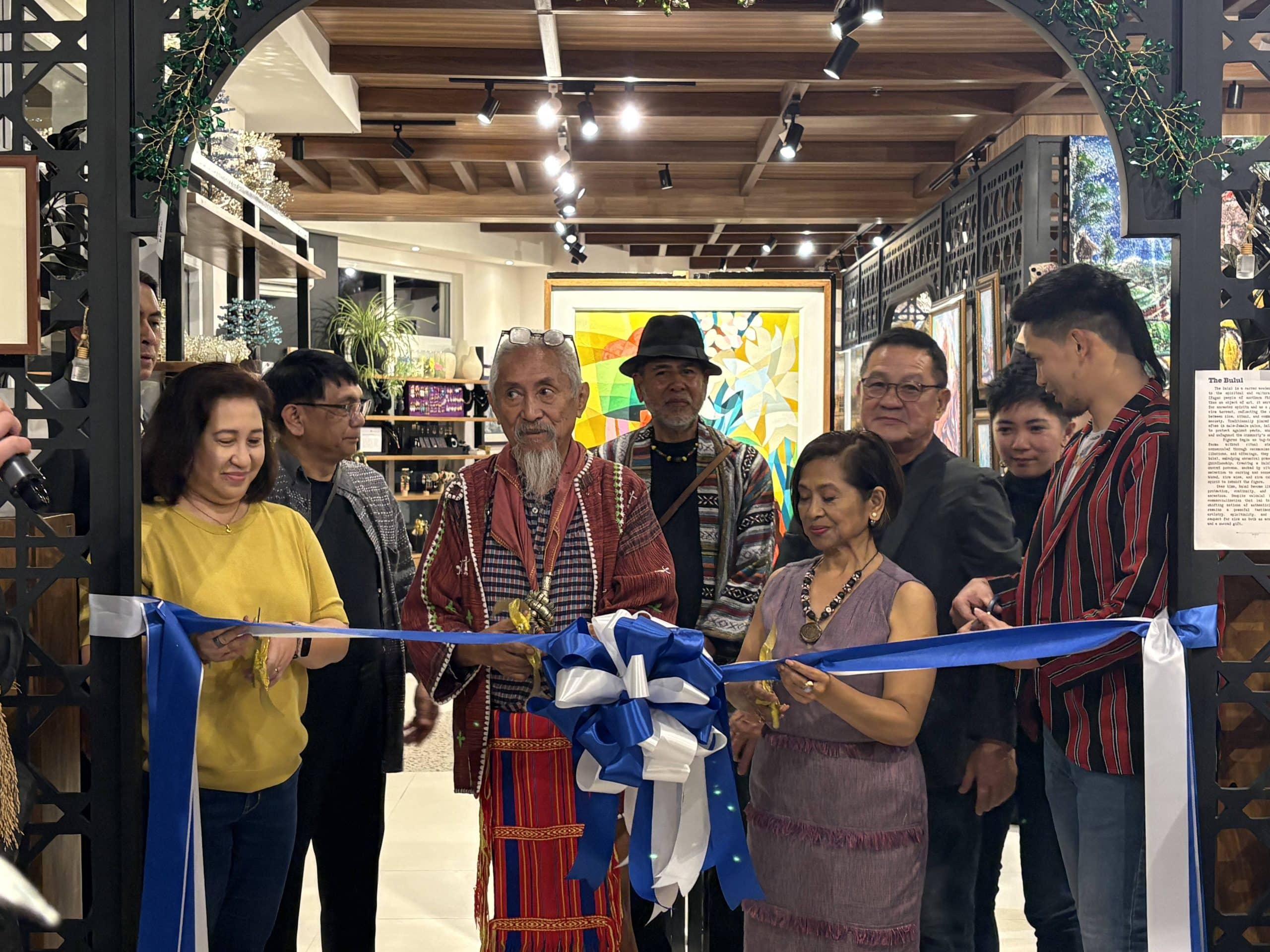
That was the takeaway at the launch of “Our Locale,” an art exhibit at the Made Here Artisan’s Studio in Wright Park Hotel on March 25.
Seven artists showcased their perspectives on the local scene, exploring the evolving identity of Baguio City and the Cordillera region.
The featured artists include Titus Cura, Sonny Zandueta, Dulthe Carlo Munar, Jordan Mang-osan, SiLan, Alfonso Dato, and Harold Banario.
National Artist Kidlat Tahimik, who spoke at the launch, urged local creators to avoid being “copycats” of international trends. Instead, he encouraged them to embrace their indigenous roots.
“We as artists need to fight for our local themes, stories, and images,” Tahimik said. “Artworks in this exhibit have individual signatures; the local richness of our Cordillera culture is very much in the subjects.”
Tahimik also challenged colonial narratives that once labeled Igorot ancestors as “backward” or “primitive,” calling on artists to reclaim those identities through their work.
Movement and Tradition
Banario, 32, a former Team Lakay mixed martial arts fighter retired from the ring in 2022 to pursue art full time.
He blends the techniques of Renaissance and Baroque masters with indigenous subjects.
“The subjects in [the old masters’] paintings look like they’re moving, so I adapted movement, but my subject is cultural, especially the dance,” Banario said.
His featured acrylic painting, titled “Catch,” depicts a horse, a nod to Wright Park’s famous horseback riding tradition.
Similarly, 28-year-old independent artist SiLan incorporates Kalinga beads and regional weaving patterns into her work. A graduate of Benguet State University, SiLan uses a style that blends cubism with the aesthetics of stained glass. Her pieces in the exhibit focus on the “Mother and Child” theme.
“Through painting, I am saying thank you to my mother and to all mothers who sacrifice for their children,” SiLan said.
The Road Back to Art
For some, the exhibit marks a return to a long-dormant passion.
Monar, 64, turned to art as his “retirement” after teaching architecture at Saint Louis University for decades. While architecture was his livelihood, he said art provides him creative freedom and “healing.” His work involves a mix of media, including a self-designed mechanical device he uses to assist with underpainting.
Cura, 72, also staged a comeback. A Fine Arts student at the University of Santo Tomas in the 1970s, Cura put his career on hold for decades to work in sales and marketing to support his family.
“I tried exploring other art styles before, but you have to develop your own style,” said Cura, who specializes in cubist acrylics. “To be an established artist, you must have a signature.”
Challenges in the ‘Creative City’
Despite Baguio’s status as a UNESCO Creative City of Crafts and Folk Art, many artists expressed concerns over the lack of local support and the devaluation of their work.
“Many artists sell at pop-up shops or bazaars where their work is often devalued or haggled over,” said Eric Coronacion, the hotel’s retail and culture manager.
SiLan noted that many young artists are discouraged because art is not viewed as a financial necessity. She called for more formal galleries to be built in the city to provide artists with professional platforms.
Economic realities also persist, Cura noted that while the talent is in Baguio, the majority of high-end buyers still come from Metro Manila.
The “Our Locale” exhibit is open to the public until May 25. Artworks range in price from four-figure sums to six-figure investments. Lyndee Buenagua/UP Baguio intern