
Atty. Dennis Gorecho
- Major awards for gothic horror “Mag-iina” at Cinemalaya 2026 - August 25, 2026
- Major awards for queer film “Tayo Lang Ang Nakakaalam” at Cinemalaya 2026 - August 24, 2026
- Children tie for Best Supporting Actor award in Cinemalaya 2026 - August 19, 2026
“Enough is enough. Let us now raise our voices louder and demand accountability.”
Bayombong Catholic Bishop Jose Elmer Mangalinao warned of worsening ecological damage in Nueva Vizcaya as he cited the environmental conflict in Dupax del Norte due to mining exploration activities by Woggle Corporation.
Dupax del Norte is a 3rd-class municipality with 15 barangays, and a mineral-rich area with huge economic potential through mining, particularly gold and copper.
In August 2025, the Mines and Geosciences Bureau (MGB) of the Department of Environment and Natural Resources approved an exploration permit for Woggle Corp. , an affiliate of the British firm Metals Exploration Plc and FCF Minerals Corp. covering more than 3,100 hectares in Dupax del Norte that straddle five barangays—Bitnong, Inaban, Mungia, Parai, and Oyao.
Residents of Barangay Bitnong began manning a barricade in September 2025.
Police arrested on January 23, 2026 at least eight individuals following a court order to dismantle the barricade blocking mining firm Woggle Corp.’s access to an exploration site. On Monday, January 26, the prosecutor’s office dismissed the case of “resistance and disobedience” against the seven residents.
“It is painful to see the suffering of our brothers and sisters at the barricade — simple citizens and farmers who only want to defend their life and livelihood, their land,” Bishop Mangalinao said.
Some of the grounds of opposition on the planned mining operations in Dupax del Norte include : (a) the threat to water sources as mining can pollute rivers and irrigation systems with silt and heavy metals, affecting agriculture and drinking water; (b) the damage to agricultural lands as the proposed site covers farmlands and forests essential to local food production; (c ) the risk to biodiversity as the forests are home to endangered plants and animals; mining will destroy their habitat; (d) the adverse cultural and community Impact as the area is part of their heritage and is home to Indigenous Peoples whose free, prior, and informed consent (FPIC) is required under the Indigenous Peoples Rights Act (RA 8371); and ( e) the violation of local laws as Nueva Vizcaya has an Environment Code prohibiting destructive mining practices such as open-pit operations.
NCIP issued a Certificate of Non-Overlap (NCO) because Dupax del Norte is not currently classified as an ancestral domain under their records, thus there was no IPRA’s FCIP process done.
However, barangay councils and the Sangguniang Bayan of Dupax del Norte passed resolutions opposing the exploration permit, citing the lack of proper consultation and the lack of written consent from surface owners and occupants. Residents themselves say they were never meaningfully informed and never gave permission for exploration on or near their lands.
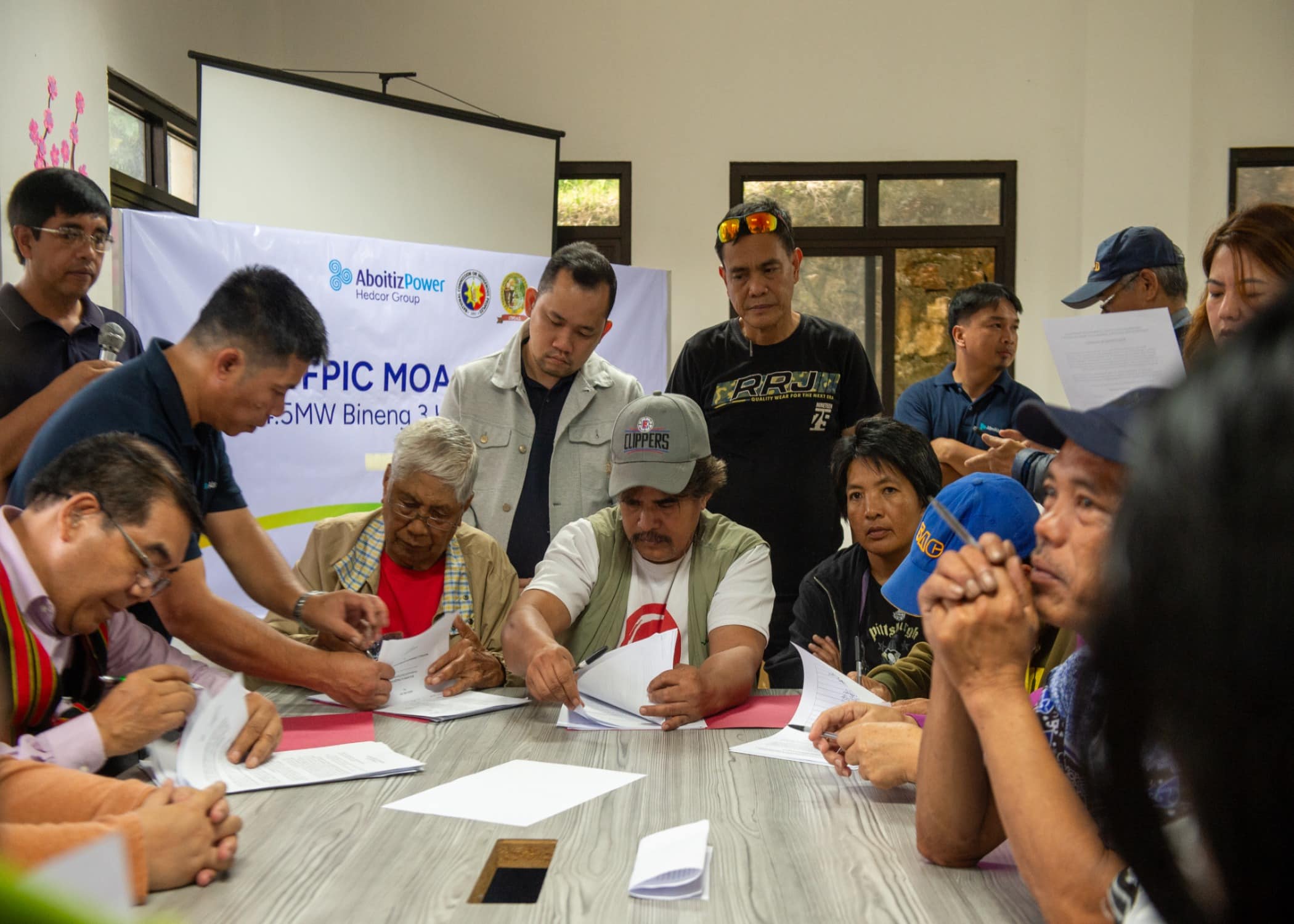
They allege that signatures for the project’s FPIC were obtained deceptively, such as through attendance sheets for government aid (ayuda).
In DENR vs. Lepanto Mines (G.R. No. 244216, June 21, 2022), Supreme Court Senior Associate Justice Marvic Leonen said that IPRA introduced measures to guarantee that their rights over their ancestral lands, including the resources found in them, are protected.
These protections include a certification precondition before any license, concession, lease, or production sharing agreement involving the exploitation of natural resources may be granted or renewed. The certification precondition includes obtaining FPIC from the affected indigenous peoples.
Leonen stressed that the agreements must be construed with the utmost scrutiny, for they affect not only the nature of the property rights they vest, but also all other extractive natural resource rights that potentially negate the constitutionally protected rights of indigenous cultural communities.
The process requires that consent be given freely, without coercion, and based on full, transparent disclosure of project details, ensuring community rights to self-determination.
Nueva Vizcaya, located along the Caraballo Mountains and the Sierra Madre range in northern Luzon, has long been a flashpoint for mining-related conflict.
Nueva Vizcaya is home to about 18 indigenous peoples, which includes the major tribes of the Ifugao (Quezon, Bagabag, Kasibu), Gaddang (Solano and Bayombong), Isinai (Dupax del Sur and Bambang), Dumagat (Aritao), Kalanguya (Santa Fe), and the Bugkalot (Alfonso Castañeda and Dupax del Norte).
The barricaders legitimately exercised their constitutional right to a balanced and healthful ecology in the face of an impending mining exploration.
The residents of Dupax del Norte are currently facing challenges that strike at the very heart of their existence: the protection of their land, their environment, and their right to self-determination.
For Indigenous Peoples, land is not just “property”—it is their history, and their sacred temple.
(Atty. Dennis R. Gorecho is a junior partner of the Sapalo Velez Bundang Bulilan law offices. For comments, email info@sapalovelez.com, or call 09088665786)