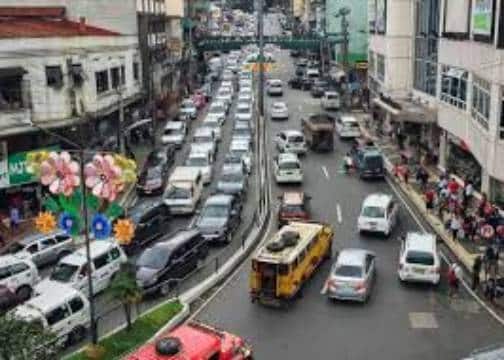
The future of Baguio’s traffic management hangs as the crucial council deliberation for the Smart Urban Mobility Project (SUMP) has been postponed.
The SUMP’s mandatory 120-day review period began on October 8, 2025, after all project documents were certified complete. It is the second high-profile Public-Private Partnership (PPP) proposal under council evaluation, following the ongoing review of the Public Market Redevelopment Project.
Staunch opposition to the project, Engineer Ted Tan said “Since day one when I learned of the proposed Congestion Charge for Baguio City, I have never wavered in my stand against this PPP Smart Urban Mobility proposal. My opposition to this project does not mean that I am against efforts to address our city’s traffic problems. In fact, I have repeatedly volunteered my traffic engineering expertise and have helped design various traffic schemes that the city has implemented over the years. However, opposing this proposal at this stage has become more difficult, almost impossible, because the process is ‘political in nature.’”
Metro Pacific Tollways Corp. (MPTC) holds Original Proponent Status (OPS) for the P2.5-billion contract, which aims to reduce traffic through contested congestion charges and other transport solutions. The deliberation, originally scheduled for November 12 following the project’s endorsement by the City Development Council (CDC), has now been rescheduled.
The SUMP proposal by MPTC has drawn significant resistance to its central funding mechanism: the proposed “congestion charging.” This system intends to require private cars to pay fees as high as P250 for entering the city’s Central Business District (CBD), including Session Road, during peak hours.
Tan continues questioning the confirmation by the CDC and the ongoing review period: “Does MPT Mobility meet the legal requirements of the new PPP Code for submitting this kind of proposal? Based on documents and evidence, NO. For example, they fail to meet the PPP requirement under Section 72.2 of the IRR, which mandates expertise and a proven track record in completing similar projects.”
As the second major PPP proposal under council review, the SUMP’s fate is now deeply intertwined with local politics, having become a key election issue in May and forcing incumbent and aspiring city officials to take a firm public stance.
Further fueling public distrust, Tan expressed difficulty in believing MPT Mobility, noting: “During last year’s public consultations on their Smart Urban Mobility proposal, they committed to provide copies of their traffic surveys—the very basis of their ‘Congestion Charge’ proposal at the CBD. Yet until now, nothing has been given.”
“Once approved by the City Council—hopefully not—this proposal will proceed to implementation with no turning back. Even the lower courts can’t stop it, in accordance with PPP guidelines. Are Baguio motorists ready for this additional financial burden without traffic benefits in return,” he said.
The 120 day review period ends on January 15, 2026, in which the council will have to decide to accept the project, accept it with revisions or reject it all together. By Maria Elena Catajan